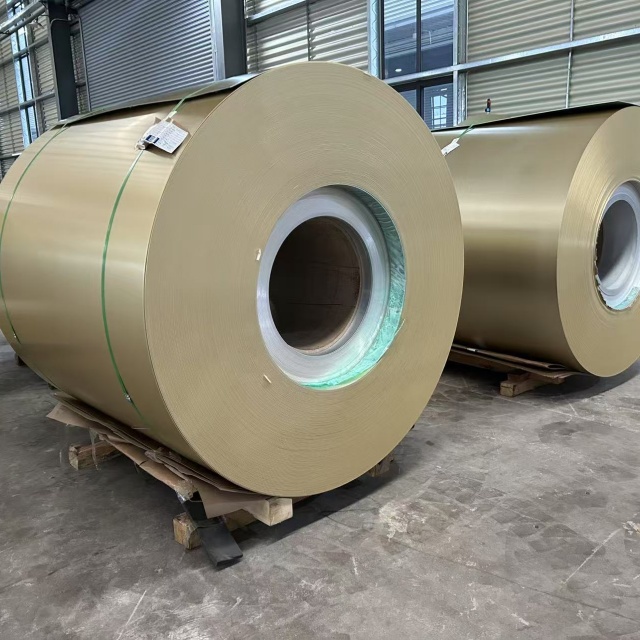
The surface finish of an aluminum coil dictates the final aesthetic of a product and its long-term viability in the intended environment. Specifying the wrong finish leads to downstream failures during fabrication and installation. We often see these failures manifest as excessive glare on architectural facades, visible micro-scratching during roll forming, poor adhesive bonding on structural panels, or maintenance headaches in high-traffic areas. To make a technically sound specification, engineering and design teams must evaluate the distinct structural, aesthetic, and processing trade-offs between different mechanical preparations. You need to understand how the metal is treated before it enters the electrochemical bath. The choice between a directional grain and a highly polished surface changes how the material interacts with light, adhesives, and physical impact. This guide breaks down the exact parameters you need to evaluate to mitigate fabrication risks and secure long-term performance in the field.
Baseline Protection: Both finishes leverage the anodizing process to create a durable, oxidation-resistant anodic layer that is integrated into the metal, outperforming standard mill finishes and preventing the finish from simply "flaking off."
Brushed Practicality: Brushed finishes offer a directional, machine-finished satin texture that diffuses light, enhances adhesive grip, and naturally conceals fingerprints, surface wear, and minor scratches.
Mirror Aesthetics: Mirror finishes deliver maximum reflectivity and a premium, polished appearance by completely removing surface texture, but require stringent handling and maintenance protocols to prevent visible surface degradation.
Decision Matrix: Selection ultimately hinges on balancing the required Light Reflectance Value (LRV), secondary processing needs (like bonding), and the physical realities of the application environment (e.g., decorative trim vs. heavy-duty architectural panels).
Understanding Anodized Aluminum Coil Finishes
The Anodizing Process
Electrochemical anodizing is a controlled oxidation process. It converts the raw metal surface into a decorative, durable, and corrosion-resistant anodic oxide finish. Unlike paints or powder coatings, the anodic layer is not applied to the surface. It grows directly from the aluminum substrate. The coil is submerged in an acid electrolyte bath. An electrical current passes through the medium. Oxygen ions release from the electrolyte and combine with the aluminum atoms at the surface. Because this oxide layer integrates fully into the underlying metal, it cannot peel, chip, or flake off. The resulting structure is highly porous at a microscopic level. This allows it to absorb dyes if coloring is required. We then seal it to lock in the finish and maximize corrosion resistance. This inherent durability makes anodized aluminum a superior choice for applications demanding longevity and structural integrity.
Surface Preparation as the Differentiator
The terms "brushed" and "mirror" do not describe the anodizing process itself. They refer to the mechanical or chemical surface preparation applied to the raw aluminum coil before or during the anodizing sequence. The anodizing bath simply preserves and hardens whatever surface topography already exists. If you run a raw, untreated mill-finish coil through an anodizing line, you get a protected but visually inconsistent product. It will show all the rolling lines and metallurgical imperfections of the raw metal. To achieve a specific aesthetic, the coil must be mechanically abraded with specialized belts to create a brushed texture. Alternatively, it can be intensively polished and chemically brightened to create a mirror surface. This initial preparation dictates the final texture, light behavior, and tactile feel of the finished product.
Baseline Success Criteria
Before comparing specific finishes, you must establish what a successful coil specification looks like. A high-quality coil requires a consistent anodic layer thickness across the entire width and length of the run. It also requires proper alloy selection. For example, 5000-series alloys offer excellent anodizing characteristics and structural strength. Certain 3000-series alloys might show structural streaking after the electrochemical bath. Adherence to structural requirements, temper designations, and bend radii limits are non-negotiable baselines. Once these engineering parameters are locked in, the surface finish elevates the material from a purely functional substrate to a finished, application-ready component. This controlled process vastly outperforms alternatives like stucco-embossed or raw mill-finish coils. Those alternatives lack the hardened protective oxide layer.
Brushed Anodized Aluminum: Characteristics and Trade-offs
Aesthetic Profile
A brushed finish is often called a machine finish or directional satin finish. It features a distinct linear grain. We achieve this texture by passing the aluminum coil under abrasive belts or brushes prior to anodizing. The grit size of the abrasive dictates the depth and visibility of the grain lines. This allows for variations ranging from a fine, subtle satin to a heavy, aggressive brush stroke. Visually, this finish is non-reflective. It typically falls into the matte to semi-gloss spectrum depending on the exact mechanical prep and subsequent chemical etching. The directional grain interacts with ambient light by diffusing it along the axis of the brush lines. This creates a muted, sophisticated metallic appearance. It avoids the harsh glare associated with highly polished metals.
Performance and Maintenance Realities
The primary advantage of a brushed surface lies in its practical performance in the field. The textured topography acts as a natural camouflage for daily wear and tear. The surface is already defined by microscopic peaks and valleys. Minor abrasions, scuffs, and environmental debris blend into the existing grain pattern. Fingerprints and smudges are significantly less visible on a brushed surface compared to a smooth one. This results in a low-maintenance lifecycle. Facility managers and end-users can maintain the appearance of the metal with basic, routine wipe-downs. They do not need specialized polishing compounds. For high-touch environments, this inherent ability to hide imperfections drastically reduces ongoing labor requirements.
Secondary Processing Advantages
From a fabrication and assembly standpoint, brushed aluminum offers distinct advantages for secondary processing. The micro-texture created by the abrasive belts provides superior mechanical tooth. When structural adhesives, sealants, or double-sided industrial tapes are applied to the surface, the adhesive matrix flows into the microscopic valleys of the brushed grain. This mechanical interlocking significantly increases the surface area available for bonding. It results in higher peel and shear strengths. For architectural panels that rely on hidden structural silicone glazing (SSG) or stiffener attachments using VHB tapes, a brushed finish provides a much more reliable bonding substrate than a perfectly smooth surface.
Ideal Use Cases
Based on its durability, light diffusion, and low-maintenance profile, brushed aluminum is the standard specification for a wide range of demanding applications. Proven use cases include:
High-traffic architectural wall panels and column covers.
Heavy-duty equipment housing and industrial machinery enclosures.
Consumer appliance fascias, such as refrigerator doors and oven control panels.
Durable nameplates, asset tags, and control panels.
Exterior signage and wayfinding systems exposed to pedestrian interaction.
Elevator cab interiors and escalator cladding.
![Anodized Aluminum Coil Finish Comparison]()
Mirror Anodized Aluminum: Characteristics and Trade-offs
Aesthetic Profile
A mirror finish delivers a high-gloss, highly reflective surface. It mimics the appearance of polished chrome or glass mirrors. Achieving this aesthetic requires an intensive, multi-step mechanical polishing process. This completely removes all surface texture, rolling lines, and metallurgical imperfections from the raw coil. Following the mechanical polish, the aluminum is often chemically brightened in a specialized acid bath. This maximizes specular reflectance before the final anodizing step locks in the finish. The result is a pristine, ultra-smooth surface with exceptional clarity and depth. Unlike brushed finishes that scatter light, a mirror finish provides direct, specular reflection. This makes it a premium choice for decorative applications where visual impact, light manipulation, and a high-end aesthetic are the primary design drivers.
Performance and Maintenance Realities
The stunning aesthetic of a mirror finish comes with inherent vulnerabilities in real-world environments. The surface is perfectly smooth and highly reflective. Any disruption to that surface becomes immediately obvious. A single micro-scratch, a speck of dust, or a stray fingerprint will catch the light. It stands out sharply against the polished background. Maintaining a mirror finish requires specialized, non-abrasive cleaning protocols. Standard paper towels or rough cloths can introduce fine swirl marks into the anodic layer over time. Cleaning staff must use clean microfiber cloths, pH-neutral solutions, and specific wiping techniques. This prevents visible surface degradation. This makes mirror finishes less suitable for high-touch areas unless strict maintenance regimens are enforced.
Ideal Use Cases
Mirror finishes are specified for applications where reflectivity, light control, or premium aesthetics are absolutely non-negotiable. Common applications include:
Lighting reflectors and parabolic louvers for commercial LED fixtures.
Solar concentrators and thermal energy collection panels.
Cosmetic automotive trim and interior cabin accents.
High-end interior decorative elements, such as retail display fixtures.
Optical equipment components requiring specific light-bouncing properties.
Cosmetic packaging and luxury consumer goods hardware.
Brushed vs Mirror Anodized Aluminum: Core Evaluation Dimensions
To make an informed specification, you must evaluate both finishes across several critical engineering and operational dimensions. The following table summarizes the primary differences before we explore them in detail.
| Evaluation Metric | Brushed Finish | Mirror Finish |
| Surface Topography | Directional grain with microscopic peaks and valleys. | Ultra-smooth, mechanically polished flat surface. |
| Light Reflectance | Diffuse reflection; scatters light to reduce glare. | Specular reflection; bounces light directly for high clarity. |
| Scratch Visibility | Low. Texture naturally hides minor abrasions and wear. | High. Any surface disruption is immediately visible. |
| Adhesive Bonding | Excellent. Micro-texture provides strong mechanical tooth. | Poor to Fair. Requires specialized primers for structural bonds. |
| Maintenance Needs | Low. Basic wipe-downs with standard commercial cleaners. | High. Requires microfiber cloths and non-abrasive techniques. |
Durability and Scratch Resistance in the Field
When comparing how each finish handles physical impact, you must distinguish between actual material hardness and the visual perception of damage. The anodic layer itself is incredibly hard. It often approaches the hardness of a sapphire on the Mohs scale. Assuming the anodizing bath parameters and coating thickness are identical, a brushed coil and a mirror coil possess the exact same surface hardness and scratch resistance. However, the visibility of damage differs drastically. There is a common misconception in the industry that a mirror finish is a thin layer that scratches off easier. This is false. The layer thickness is the same, but the lack of surface texture on a mirror finish makes any damage obvious. When a hard object strikes the surface, it fractures the clear oxide layer. On a mirror surface, this fracture scatters light, creating a bright white scratch against a dark, reflective background. On a brushed surface, that same scratch is lost within the existing directional grain.
Light Reflectance Value (LRV) and Glare Management
Light Reflectance Value (LRV) measures the total quantity of visible and usable light reflected by a surface in all directions. You must contrast the light-diffusing properties of brushed aluminum against the specular reflection of mirror finishes. Brushed aluminum scatters incoming light rays at multiple angles. This diffusion significantly reduces glare. It makes it the preferred choice for exterior architectural cladding where blinding reflections could pose a hazard to drivers or pedestrians. Conversely, mirror finishes offer high specular reflectance. Incoming light rays bounce off the surface at the exact same angle they hit it. This property is highly valued for indoor lighting efficiency. In commercial troffers or high-bay lighting fixtures, a mirror-finished reflector maximizes lumen output. It directs the light source exactly where it is needed without scattering or absorbing the energy.
Adhesive Grip and Assembly
Assembly methods dictate finish selection just as much as aesthetics. You must contrast the bonding capabilities of both surfaces. Structural adhesives, double-sided tapes, and silicones rely on surface energy and mechanical interlocking to achieve their rated peel and shear strengths. Brushed finishes are heavily preferred for structural adhesive applications because the abrasive preparation creates a rough micro-topography. Mirror finishes present a significant challenge for adhesives. The ultra-smooth surface offers no mechanical tooth for the adhesive to grip. If you must bond components to a mirror-finished coil, you will likely need to specify specialized chemical primers or plasma surface treatments. Alternatively, you might abandon adhesives entirely in favor of mechanical fasteners like rivets or concealed studs.
Cost Implications and Scalability
You must analyze the cost delta between the two finishes, especially for large-scale production runs. Mirror finishes typically require more intensive mechanical polishing, multiple buffing stages, and chemical brightening baths before anodizing. This extended processing time increases manufacturing costs. Furthermore, mirror finishes require stringent quality control. A minor metallurgical inclusion or a slight variation in the polishing pressure can result in a rejected batch. This impacts overall yield and per-square-foot pricing on large coil runs. Brushed finishes are generally more scalable and forgiving during production. They result in higher yields and more predictable lead times for high-volume manufacturing.
Cleaning Protocols and Long-Term Maintenance
The lifecycle cost of maintaining each finish must be factored into the initial specification. Outline the maintenance expectations with the end-user. Brushed surfaces require basic wipe-down procedures. They can withstand standard commercial cleaning agents and standard janitorial cloths without degrading the aesthetic. Mirror finishes demand strict, chemical-sensitive regimens. Cleaners must be strictly pH-neutral (between pH 6 and 8) to avoid etching the anodic layer. Abrasive pads, stiff brushes, or harsh alkaline chemicals will permanently cloud or scratch the mirror surface. If the application environment cannot support this level of delicate maintenance, a mirror finish will quickly degrade into a hazy, scratched eyesore.
Implementation Risks and Mitigation Strategies
Handling and Fabrication Vulnerabilities
The fabrication floor is where most surface damage occurs. You must detail the risks of surface marring during roll forming, stamping, or bending operations. Metal-to-metal contact with forming dies, feed rollers, or press brakes can easily scratch the anodic layer. This risk is exponentially higher for mirror finishes. When feeding coil into a roll former, the friction between the aluminum and the steel dies generates heat and mechanical stress. If you run a mirror-finished coil without adequate lubrication or protective masking, the dies will inevitably gall the surface. Galling occurs when microscopic pieces of the aluminum oxide transfer onto the steel tooling. Once the tooling is contaminated, it will drag across every subsequent linear foot of the coil, leaving deep, irreparable gouges.
To mitigate these vulnerabilities, you must implement strict handling protocols. Recommend mitigation tactics such as specifying protective strippable films (masking) applied directly to the coil at the mill. For mirror coils, specify a high-quality polyethylene (PE) or polyvinyl chloride (PVC) film. This film remains on the metal throughout the entire stamping or roll-forming process. It is only peeled off after final installation. For deep draw operations, you must also verify the masking adhesive does not cross-link and permanently bond to the anodic layer under high pressure. Additionally, verify fabrication equipment utilizes polyurethane rollers and properly polished dies with adequate clearances.
Stiffness and Crazing
A major engineering reality of pre-anodized coil is how it behaves under bending stresses. The anodic layer is an aluminum oxide ceramic. It possesses zero ductility. When you bend a piece of pre-anodized coil to a 90-degree angle, the outer radius of the bend stretches. The aluminum substrate yields, but the ceramic coating fractures. This micro-cracking is known as crazing. In architectural applications, severe crazing traps dirt and moisture, creating a visible dark line along the bend over time.
You must discuss how this crazing affects the final product. While crazing does not typically compromise the corrosion resistance, it can be visually unappealing. It appears as a frosted or dull line on the bend radius. Explain how alloy selection and temper affect the stiffness and formability of the coil. To control crazing, you must engineer the bend radius relative to the metal thickness (the T-radius). A 1T bend will cause severe crazing on a Class I anodic coating. We recommend designing profiles with a minimum 2T or 3T bend radius. Additionally, specifying a softer temper allows the underlying metal to flow more evenly during the bend, reducing localized stress concentrations on the anodic layer.
| Alloy & Temper | Formability (Bend Radius) | Anodizing Quality | Typical Application |
| 5005-H14 | Excellent (1T - 2T) | Excellent (Clear & Color) | Architectural panels, complex roll forming. |
| 5005-H34 | Good (2T - 3T) | Excellent (Clear & Color) | Flat panels, moderate bending. |
| 3003-H14 | Excellent (1T - 2T) | Fair (Prone to structural streaking) | Concealed flashing, painted substrates. |
| 6061-T6 | Poor (Requires large radius) | Good (Slight yellowish tint) | Structural components, heavy machining. |
Environmental Exposure
The intended installation environment dictates the required thickness of the anodic layer. Discuss the impact of harsh environments, including coastal salt spray, intense UV exposure, and industrial chemical fallout. Coastal environments introduce airborne chlorides that aggressively attack metal surfaces. Industrial zones expose building materials to sulfur dioxide and nitrogen oxides. The surface finish (brushed or mirror) does not dictate corrosion resistance; the anodic layer thickness does.
Emphasize the importance of specifying the correct anodic coating thickness. For interior or light-duty applications, a standard commercial coating may suffice. However, for exterior architectural applications exposed to the elements, you must specify a Class I (minimum 0.7 mil thickness) or Class II (minimum 0.4 mil thickness) anodic coating. The thicker the oxide layer, the longer the path for corrosive elements to reach the raw aluminum substrate. Furthermore, the sealing process following the anodizing bath dictates long-term performance. Proper hydrothermal sealing hydrates the aluminum oxide, swelling the pores shut and locking out contaminants. Failure to specify the correct thickness and seal quality will result in premature pitting and oxidation, regardless of how well the surface was initially polished or brushed.
Batch-to-Batch Consistency
Maintaining visual uniformity across massive projects is a known industry challenge. Architectural projects often span multiple phases, requiring several separate coil production runs over a period of years. Maintaining a consistent visual match across these runs is notoriously difficult. This is particularly challenging with directional brushed finishes used in large-scale architectural extrusions or paneling. The abrasive belts used to create brushed finishes wear down over time. A brand-new 120-grit belt produces a sharper, deeper grain than a belt that has processed 10,000 feet of coil. This variation alters how the surface reflects light, changing the perceived color even if the anodizing parameters remain identical.
If a project requires multiple coil runs over several months, panels from the first batch may look slightly different than panels from the final batch. To mitigate this, work closely with your coil supplier to establish strict visual boundary samples (light/dark and heavy/light grain limits). We establish strict Delta E color tolerances using spectrophotometers. However, spectrophotometers struggle to accurately read directional brushed finishes. Therefore, physical boundary samples representing the maximum acceptable light and dark limits must be signed off by the architect. Ensure all material for a single continuous facade is processed sequentially using the same abrasive belt setup and anodizing bath chemistry.
Conclusion
Request physical coil samples of both brushed vs mirror anodized aluminum finishes and subject them to your specific fabrication processes, including bending and adhesive peel tests.
Review the Light Reflectance Value (LRV) data sheets to ensure the finish meets your project's glare reduction or lumen output requirements.
Consult with a metallurgy partner to define the exact alloy, temper, and anodic thickness required to prevent crazing during your specific roll forming or stamping operations.
Define your protective masking requirements, confirming the strippable film is compatible with both the finish and your fabrication machinery.
FAQ
Q: What is the main difference between brushed and mirror anodized aluminum?
A: The difference lies entirely in the mechanical surface preparation before anodizing. Brushed aluminum is run under abrasive belts to create a directional, textured grain that diffuses light. Mirror aluminum undergoes intensive mechanical polishing and chemical brightening to remove all texture, resulting in a perfectly smooth, highly reflective surface prior to entering the anodizing bath.
Q: Will the mirror or brushed finish scratch off over time?
A: No. The anodizing process is an electrochemical integration into the aluminum substrate, not an applied coating like paint or powder coat. Because the protective oxide layer is grown directly from the metal itself, it cannot peel, flake, or scratch off in layers under normal environmental conditions.
Q: Does mirror anodized aluminum scratch more easily than brushed?
A: The actual hardness of the anodic layer is identical for both finishes. However, mirror finishes make micro-scratches highly visible because the surface is perfectly smooth and reflective. A brushed texture naturally hides and camouflages minor abrasions within its existing directional grain, making it appear more scratch-resistant.
Q: How does adhesive bonding differ between brushed and mirror finishes?
A: Brushed aluminum provides significantly better adhesive bonding. The micro-texture created by the brushing process offers mechanical tooth, allowing structural adhesives and tapes to interlock with the surface peaks and valleys. The ultra-smooth surface of a mirror finish lacks this topography, often requiring specialized chemical primers to achieve strong bonds.
Q: Can you use brushed anodized aluminum for exterior architectural applications?
A: Yes, it is highly recommended for exteriors. The anodic layer provides excellent oxidation and UV resistance. The brushed texture diffuses harsh sunlight to prevent dangerous glare, and its ability to hide environmental wear, dust, and minor impacts makes it ideal for long-term architectural facades.
Q: Is anodized aluminum better than a standard mill finish or prepainted coil?
A: Yes, for applications requiring durability and a metallic aesthetic. The anodic oxide layer prevents the natural oxidation that plagues raw mill finishes. Compared to prepainted coils, anodizing improves surface hardness, cannot peel or blister, and maintains the true, authentic metallic appearance of the aluminum.
Q: How do you clean mirror finish aluminum without damaging it?
A: You must use strictly pH-neutral cleaners (pH 6-8) and clean, lint-free microfiber cloths. Avoid abrasive scrubbing pads, stiff brushes, or harsh alkaline chemicals, as these will permanently etch the anodic layer or introduce fine swirl marks that destroy the high-gloss clarity of the mirror surface.