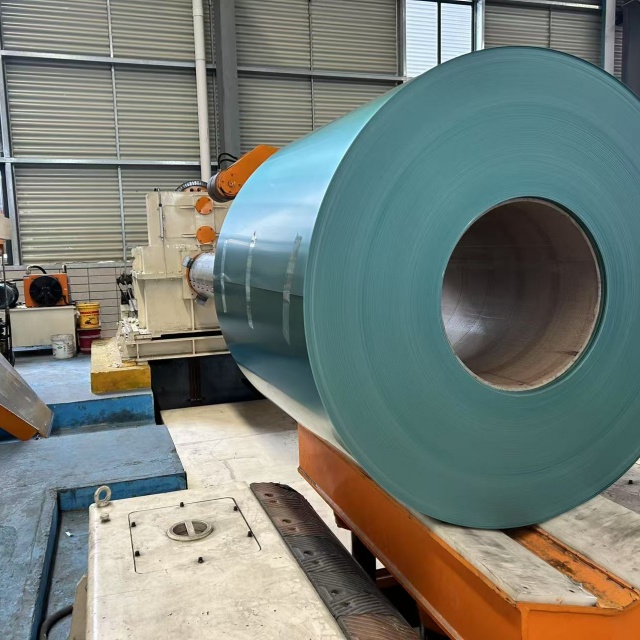
Raw aluminum coil rarely meets the strict aesthetic and performance requirements of end-users straight off the mill. Standard anodizing processes actually amplify existing surface defects rather than hiding them. Mill marks, extrusion lines, CNC machining textures, and minor handling scratches become glaringly obvious after electrochemical treatment. These physical imperfections lead to inconsistent dye absorption, high rejection rates, and compromised coating adhesion in the final product. Mechanical surface preparation bridges the gap between raw material inconsistencies and final coating performance. This guide evaluates how integrating mechanical profiling prior to the electrochemical process dictates the final quality, durability, and visual uniformity of sandblasting anodized aluminum coils. We examine abrasive media selection, process risk management, and the mechanical advantages of a properly profiled substrate for high-volume production environments.
Defect Eradication: Sandblasting homogenizes the aluminum coil surface, removing directional mill lines and tooling marks to create a uniform topography essential for consistent anodic layer growth.
Enhanced Adhesion & Dye Uptake: A mechanically roughened surface increases the microscopic surface area, directly improving dye absorption for colored anodizing and strengthening the mechanical bond for secondary adhesives or paints.
Media Selection is Critical: The choice of abrasive media (e.g., glass beads vs. aluminum oxide) dictates the final finish—ranging from a soft satin matte to a highly textured, high-adhesion profile.
Risk Management: Improper blasting parameters on continuous aluminum coils can induce substrate warpage, media embedment, or dimensional tolerance failures, requiring strict process controls.
Problem Framing: Why Surface Prep Dictates Anodized Aluminum Quality
The Limitations of Chemical Etching Alone
Standard alkaline etching relies on caustic soda (sodium hydroxide) baths to dissolve the outer layer of aluminum. This chemical process removes light surface oils, natural oxides, and minor handling marks effectively. However, chemical etching proves entirely insufficient for deep mechanical defects. It cannot erase deep scratches, heavy extrusion lines, or residual CNC machining marks on parts stamped from continuous coils. The chemical bath dissolves the metal uniformly across the entire topography. It lowers the peaks and valleys at the exact same rate. This means the depth of a scratch remains identical relative to the surrounding surface, even after extended time in the etch tank.
A successful pre-anodizing surface demands strict physical criteria. You must achieve a uniform roughness average (Ra) across the entire coil width, typically targeting between 1.5 and 2.5 micrometers depending on the final application. The surface must exhibit a complete absence of directional grain. Relying solely on chemical etching fails to meet these mechanical leveling requirements. In fact, extended etching highlights distinct grain boundaries in certain alloys, creating an undesirable galvanized or frosty appearance. Mechanical surface preparation physically alters the topography to erase these deep-seated flaws before the coil ever reaches the chemical tanks.
Chemical etching alone routinely fails to address the following common coil defects:
Heavy extrusion die lines formed during the initial manufacturing process.
Deep handling scratches incurred during coil winding, transport, and uncoiling.
Residual chatter marks from secondary CNC machining or stamping operations.
Localized oxidation patches that penetrate deep into the aluminum substrate.
The Impact of Raw Substrate Inconsistencies on the Anodic Layer
The anodizing process does not deposit a coating onto the metal like paint or powder coating. Instead, the anodic oxide layer grows directly from and into the aluminum substrate. Industry standards dictate a 50/50 growth rule: the oxide layer penetrates 50% into the base metal and builds 50% outward. This growth mechanism means the resulting layer is highly transparent. Any pre-existing flaw on the raw coil is magnified by this clear oxide layer. The anodizing process encapsulates and highlights scratches rather than filling them in.
Architectural and aerospace-grade finishes require absolute visual perfection. A minor rolling mark from the mill becomes a highly visible streak after anodizing and dyeing. Substrate inconsistencies also disrupt the uniform formation of the hexagonal anodic cells. Variations in surface density or residual stresses alter how the electrical current flows through the metal in the sulfuric acid bath. This leads to uneven coating thickness and compromised corrosion resistance. You must establish a pristine, homogenized baseline surface. Mechanical blasting resets the surface topography, ensuring the subsequent electrochemical growth proceeds uniformly across every square inch of the coil.
Solution Categories: Evaluating Abrasive Media for Aluminum Coil Prep
Glass Bead Blasting (Satin and Matte Finishes)
Glass beads provide a non-destructive, peening action on the aluminum surface. The spherical shape of the media impacts the metal without cutting into it. This action creates a uniform, non-reflective matte finish. Glass bead blasting does not remove significant substrate material. It smooths out minor imperfections by displacing the surface metal microscopically. You use this media to create specific, intentional visual textures. These premium cosmetic effects far exceed the visual appeal of smoother, untreated finishes.
Manufacturers rely on glass beads for high-end cosmetic applications. Best use cases include architectural exterior panels, consumer electronics housings, and decorative coil applications. The peening action also imparts a slight compressive stress on the surface, which marginally improves the fatigue resistance of thin-gauge parts. You must control the blast pressure carefully. Excessive pressure shatters the glass beads. Shattered beads turn into angular fragments that scratch the surface and ruin the intended satin finish. Proper media classification and continuous screening ensure the beads remain spherical during the production run.
Aluminum Oxide (Aggressive Profiling and High Adhesion)
Aluminum oxide features a highly angular and aggressive structure with a Mohs hardness of 9.0. Unlike glass beads, this media cuts deeply into the aluminum substrate. It aggressively removes heavy oxidation, stubborn mill scale, and deep mechanical scratches. The cutting action creates a deep, jagged anchor profile. This rough topography drastically increases the total surface area of the coil, providing the necessary grip for heavy-duty applications.
You select aluminum oxide when the primary goal is mechanical adhesion rather than cosmetic appearance. Best use cases include industrial components requiring secondary powder coating. It is also ideal for parts that receive heavy-duty structural adhesives directly over the anodized aluminum layer. The angular profile provides microscopic hooks that allow secondary coatings to lock into the surface physically. You must monitor the grit size closely. A 60-grit media creates a much deeper profile than a 120-grit media. Matching the grit size to the required coating thickness prevents the peaks of the profile from protruding through the final finish.
Alternative Media (Silicon Carbide, Plastic Media, Walnut Shells)
Certain applications require alternative blasting media to protect delicate substrates or achieve specialized material removal rates. Silicon carbide is harder and sharper than aluminum oxide, boasting a Mohs hardness of 9.5. You use it for extremely fast cutting and deep profiling on thicker gauges. However, it degrades quickly and requires frequent replenishment. Plastic media, typically made from urea or melamine, offers a much softer alternative. It strips existing anodic layers or paints without altering the underlying aluminum topography. This proves invaluable for rework operations on precision components where dimensional tolerances cannot change.
Walnut shells provide a gentle, non-abrasive cleaning action. You use organic media to remove surface contaminants or light flash without changing the dimensional tolerances of the coil. These softer media types will not erase deep mill marks. They serve specialized roles in surface preparation. Choosing the correct alternative media depends entirely on the gauge of the coil and the specific defect you need to address.
| Media Type | Particle Shape | Mohs Hardness | Primary Surface Effect | Material Removal Rate | Ideal Application |
| Glass Beads | Spherical | 5.5 - 6.0 | Peening, Satin/Matte Finish | Very Low | Cosmetic architectural panels, electronics |
| Aluminum Oxide | Angular | 9.0 | Deep Cutting, Anchor Profiling | High | Adhesive bonding, secondary powder coating |
| Plastic Media | Irregular/Angular | 3.0 - 4.0 | Coating Stripping | Zero (on base metal) | Reworking delicate thin-gauge coils |
| Silicon Carbide | Highly Angular | 9.5 | Aggressive Cutting | Very High | Heavy industrial defect removal |
| Walnut Shells | Irregular | 2.5 - 3.0 | Gentle Cleaning | Zero | Removing light surface contaminants |
![Sandblasting anodized aluminum coil]()
Evaluation Dimensions: How Sandblasting Improves the Anodized Aluminum Finish
Dye Absorption and Color Consistency
The anodizing process creates a porous structure of hexagonal cells on the aluminum surface. During the dyeing phase, organic or inorganic dye molecules enter these microscopic pores before the final sealing process locks them in. A smooth, untreated surface often features inconsistent pore generation due to localized stresses or residual rolling oils. This leads to uneven dye uptake. A micro-roughened surface diffuses light evenly across the panel and normalizes the surface energy of the metal.
Sandblasting ensures the electrochemical bath interacts with a completely uniform topography. This uniform interaction generates a highly consistent porous structure. The pores absorb the dye at the exact same rate across the entire coil width. This mechanical homogenization prevents the blotchy, uneven appearance common in poorly prepped dyed coils. The textured surface also traps more dye volume per square inch, resulting in deeper, more vibrant colors. You achieve strict color matching tolerances across massive production batches by standardizing the mechanical pre-treatment.
The dye absorption process on a blasted surface follows a specific sequence:
The mechanical profile normalizes the surface energy, allowing the sulfuric acid to attack the metal evenly.
Hexagonal pores form at a consistent diameter and depth across the roughened topography.
Dye molecules penetrate the pores uniformly without pooling in deep, un-blasted scratches.
The nickel acetate or hot water seal hydrates the aluminum oxide, swelling the pore closed and locking the color permanently into the textured surface.
Mechanical Bonding for Secondary Coatings
Many industrial applications require secondary coatings applied over the anodic layer. Paints, powder coatings, and industrial adhesives rely heavily on mechanical adhesion. They need a textured surface to grip effectively. A standard, smooth anodized surface offers very poor pull-off adhesion strength. The secondary coating simply sits on top of the hard oxide layer. It remains highly susceptible to delamination, chipping, and peeling under physical stress or thermal cycling.
Sandblasting fundamentally changes this dynamic. The abrasive impact creates microscopic peaks and valleys. When you apply a secondary coating, the liquid or powder flows into these cavities. As the coating cures, it physically interlocks with the roughened substrate. This mechanical bond drastically increases measurable pull-off adhesion strength during ASTM D4541 testing. The combination of the porous unsealed anodic layer and the deep anchor profile provides superior grip. You ensure long-term coating durability in harsh exterior environments by mandating mechanical surface profiling.
Enhanced Abrasion and Wear Resistance
Aluminum is naturally a soft metal. While the anodic oxide layer is extremely hard, approaching the hardness of a sapphire, it remains brittle. If you apply heavy pressure to a smooth anodized surface, the soft underlying aluminum yields. The hard oxide layer then cracks like a sheet of ice on mud. Sandblasting alters the physical properties of the immediate surface layer. The kinetic impact of the abrasive media causes mechanical work-hardening.
This work-hardening increases the yield strength of the aluminum directly beneath the oxide layer. The combination of a work-hardened substrate and a hard anodic coating yields a highly robust composite surface. This dual-treatment resists scratching, gouging, and blunt impact far better than chemical etching alone. Architectural profiles and structural components face repeated mechanical wear. They endure frequent handling during installation. The hardened substrate supports the brittle oxide layer, preventing localized failure under pressure.
Overall Value Influencing Factors: Conceptual Trade-Offs
Production Costs vs. Yield Improvements
Integrating a continuous coil sandblasting line introduces significant capital expenditure. You must purchase automated blasting cabinets, media recovery systems, and heavy-duty dust collection units. Operational overhead increases due to continuous media consumption, blast nozzle wear, and high compressed air requirements. Facility managers often hesitate to add this mechanical step before the chemical tanks due to the initial setup requirements.
However, you must weigh these operational factors against the dramatic reduction in rejected materials. Surface finish defects represent the highest cause of scrap in continuous coil anodizing. A single deep scratch can ruin an entire architectural panel, wasting both the metal and the chemical processing time. Sandblasting eradicates these defects before they become permanent. The yield improvements and reduction in scrap rates typically offset the initial equipment investment rapidly. A stable, predictable pre-treatment process ensures consistent output quality. You eliminate the costly unpredictability of raw coil surface variations.
Dimensional Tolerance Variations
Aggressive defect removal inherently removes base material. When you use angular media like aluminum oxide, you strip away a microscopic layer of the aluminum coil. This alters the critical material thickness. Thin-gauge aluminum coils, such as 0.020-inch stock, are highly susceptible to these dimensional changes. You face a strict trade-off between achieving a flawless finish and maintaining required engineering tolerances for downstream manufacturing.
Glass bead peening minimizes this risk by displacing metal rather than cutting it. However, if deep scratches require aluminum oxide, you must calculate the exact material loss. You must calibrate blast pressure, media flow rate, and line speed to remove the exact minimum amount of material necessary. Over-blasting a thin coil compromises its structural dimensions. It can cause the material to fail subsequent forming or stamping operations. You must establish strict quality control checkpoints to measure coil thickness before and after the blasting cabinet using ultrasonic thickness gauges.
Visual Aesthetics vs. Structural Integrity
Architects frequently demand deep, heavily textured matte finishes for exterior cladding. Achieving these specific visual aesthetics requires aggressive blasting parameters. Heavy texturing creates striking light diffusion and hides fingerprints effectively. Yet, this deep profiling introduces microscopic stress concentrators into the metal surface. These stress points can alter the tensile properties and reduce the fatigue life of the aluminum coil under dynamic loads.
You must evaluate the mechanical requirements of the final component. If the coil will undergo severe bending, hemming, or deep drawing after anodizing, deep stress concentrators may cause the metal to fracture along the bend radius. You must balance the desired visual effect with the structural integrity of the substrate. Light glass bead blasting provides a safe middle ground for formed parts. Aggressive aluminum oxide blasting should be reserved for flat panels or heavy-gauge extrusions that do not require severe post-process forming.
Implementation Risks and Mitigation Strategies
Substrate Warpage and Distortion in Thin Coils
The kinetic energy transferred from the blast media to the aluminum surface induces compressive stress. On thick plates, this stress is negligible. On continuous thin-gauge coils, this peening-induced stress causes severe warpage. The top layer of the metal expands slightly under the impact, causing the coil to curl or "oil-can." This distortion renders the coil completely unusable for flat architectural panels or precision-stamped components.
Mitigation requires precise engineering controls. You cannot blast only one side of a thin coil without inducing warp. You must utilize automated, balanced dual-sided blasting systems. Treating both the top and bottom surfaces simultaneously neutralizes the induced surface stresses. The compressive forces on the top cancel out the compressive forces on the bottom. Operators use Almen strips to measure and match the peening intensity on both sides of the line. Additionally, you must strictly regulate blast pressure and media flow rates. Lower pressures and slower line speeds reduce the total kinetic energy transferred to the delicate substrate.
Media Embedment and Chemical Contamination
Abrasive particles endure extreme forces during the blasting process. Brittle media, especially glass beads or degraded aluminum oxide, can shatter upon impact. These microscopic fragments often embed themselves directly into the soft aluminum substrate. Embedded media acts as an electrical insulator. During the anodizing process, these non-conductive particles disrupt the uniform flow of electrical current through the sulfuric acid bath.
This disruption causes localized coating failures, commonly known as pitting or bare spots. The dye will not absorb in these areas, leaving visible white specks across the colored panel. Mitigation involves implementing aggressive post-blast cleaning protocols. You cannot rely on standard water rinses to remove embedded media. Implement ultrasonic cleaning tanks and high-pressure air blow-offs to dislodge embedded particles. Furthermore, utilize proper desmutting chemical baths. A strong nitric acid or proprietary desmut bath helps dissolve residual contaminants, removes the blasting smut, and prepares a chemically pure surface for the anodizing tank.
Managing Cast vs. Rolled Aluminum Variables
Metallurgical differences dictate the success of mechanical surface preparation. Sandblasting perfectly prepares rolled (wrought) continuous coils. The grain structure of rolled aluminum, such as 5052-H32 or 6061-T6, is dense and uniform. However, sandblasting cannot fix the inherent metallurgical flaws found in cast aluminum components. Castings often suffer from internal porosity and high silicon content.
Blasting a cast surface often exposes hidden sub-surface pores, creating a pitted surface that anodizing cannot bridge. The high silicon content in castings also creates uneven, dark anodic layers regardless of the mechanical prep. You must clarify these limitations during the engineering phase. Reinforce the importance of proper alloy selection. The 5000 or 6000 series wrought coils respond exceptionally well to mechanical profiling. They maximize the benefits of the treatment. Attempting to fix poor-quality cast alloys with aggressive blasting only exacerbates surface defects during the electrochemical process.
Conclusion
Initiate small-scale coupon testing with various media types to establish the optimal roughness average (Ra) value for your specific aluminum alloy.
Run a pilot batch through the continuous anodizing line to verify color match, dye absorption consistency, and absence of pitting.
Perform standardized pull-off adhesion tests if you plan to apply secondary powder coatings or structural industrial adhesives over the anodic layer.
Calibrate automated dual-sided blasting equipment precisely to prevent warpage and oil-canning on thin-gauge continuous coil runs.
Upgrade post-blast cleaning protocols by integrating ultrasonic baths to eliminate the risk of media embedment prior to chemical etching.
FAQ
Q: Does sandblasting remove an existing anodized layer?
A: Yes, aggressive media like aluminum oxide at high pressures will strip the hard anodic layer completely. Softer media, such as plastic or glass beads at low pressure, may only alter the surface texture without removing the entire coating. The removal rate is highly dependent on blast parameters, media hardness, and dwell time.
Q: Should you sandblast before or after anodizing?
A: For improving finish uniformity and dye absorption, sandblasting must occur before anodizing. Blasting after anodizing destroys the protective oxide layer. Post-anodizing blasting is typically only done to intentionally remove the coating for rework or to create localized distressed textures, which severely compromises corrosion resistance.
Q: What is the best sandblasting media for aluminum coil preparation?
A: Glass beads are the industry standard for achieving a uniform, cosmetic matte finish without removing base material. Aluminum oxide is preferred for aggressive defect removal and creating a deep anchor profile necessary for secondary coatings. The choice depends entirely on the required final finish.
Q: How does sandblasting affect the thickness of the final anodized layer?
A: Sandblasting increases the actual microscopic surface area of the metal. While the chemical growth rate of the oxide layer remains constant in the bath, the increased topographical area can result in a functionally thicker and more robust protective barrier across the roughened profile.
Q: Can sandblasting cause defects in anodized aluminum?
A: Yes. If blast media shatters and embeds into the soft aluminum, and is not properly cleaned prior to the anodizing bath, it causes localized electrical resistance. This results in visible pitting, bare spots, or uneven dye uptake across the finished panel.
Q: Does a sandblasted and anodized surface hold paint better?
A: Yes. The mechanical anchor profile created by sandblasting, combined with the porous nature of the unsealed or partially sealed anodized layer, provides superior mechanical interlocking. This yields exceptionally high pull-off adhesion strength for paints, adhesives, and powder coatings.